Driveways and Walkways That Handle Freeze Cycles
Concrete Work in Hazleton for cracked driveways, settling walkways, and deteriorated surfaces
Concrete that has cracked, spalled, or settled creates tripping hazards and allows water to undermine adjacent sections, accelerating further damage. Driveways and sidewalks in Hazleton experience freeze-thaw cycles that cause existing cracks to widen as water infiltrates, freezes, and expands within the concrete matrix. Worth It Construction handles concrete installation and repair, removing failed sections and pouring new slabs with proper subgrade preparation and control joints that manage cracking caused by thermal expansion and ground movement.
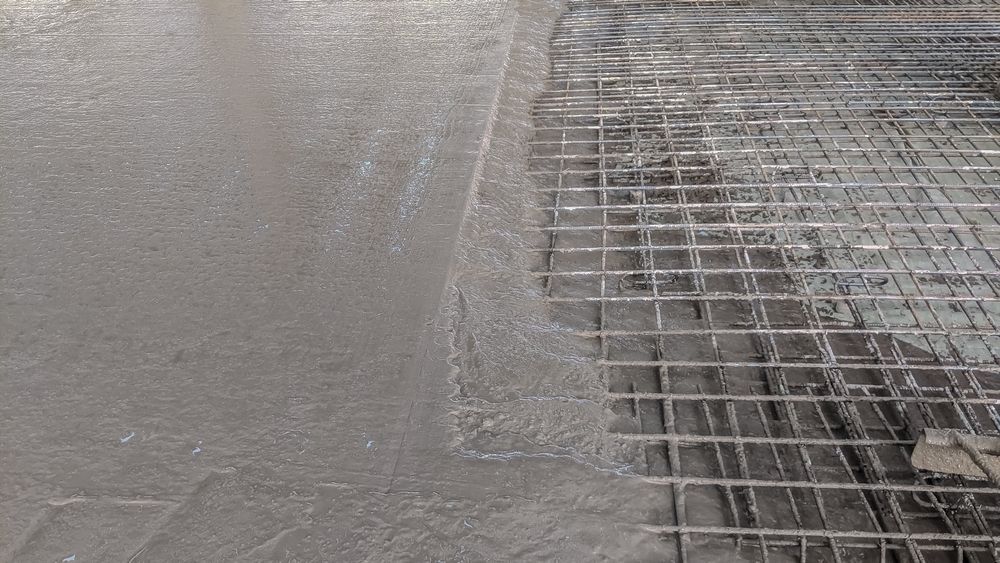
Installation begins with excavating to a depth that accommodates both the concrete thickness and a compacted gravel base, which provides drainage and prevents differential settling. Forms are set to establish grade and slope for water runoff, and reinforcement is positioned within the slab thickness to control crack width. Finishing involves floating the surface to a uniform texture, then applying a broom finish that provides traction without creating a rough surface that traps debris.
Arrange an on-site estimate to assess subgrade conditions and determine whether repair or replacement is appropriate for your concrete surfaces.
Why Subgrade Preparation Determines Concrete Performance
Concrete slabs derive their support from the material beneath them, not from the concrete itself, which is why subgrade preparation determines whether a driveway or walkway remains level over time. Compacted gravel provides a stable, draining base that prevents water from accumulating under the slab where freeze-thaw action causes heaving. Control joints are cut or formed into the slab at regular intervals to create intentional weak points where cracking occurs in a controlled pattern rather than randomly across the surface.
After installation, new concrete surfaces appear uniform in color and texture, with consistent slope that directs water away from structures rather than allowing pooling. Control joints remain visible as straight lines across the slab, and cracking occurs along these joints rather than through the middle of panels. Surfaces cure to full strength over several weeks, during which time weight loads and traffic should be limited to prevent surface damage while the concrete hardens.
Resurfacing can address cosmetic damage and minor spalling, but it does not correct underlying settlement or structural cracks that indicate subgrade failure. Crack repair involves routing out the damaged area, cleaning debris, and filling with flexible sealant or epoxy depending on crack width and load conditions. Timing for concrete work matters because installation requires temperatures above freezing during the curing period, and extreme heat accelerates curing in ways that can reduce final strength if not managed with proper techniques.
Questions about concrete work often focus on timing, repair options, and what causes the damage homeowners observe.
Common Questions About This Service
What causes concrete to crack?
Shrinkage during curing, freeze-thaw cycles, and subgrade settlement all contribute to cracking, which is why control joints are used to direct cracks to predetermined locations rather than attempting to prevent cracking entirely.
How thick should a concrete driveway be?
Residential driveways typically require four inches of concrete over a compacted gravel base, though areas with heavy vehicle traffic or poor soil conditions may need greater thickness to prevent cracking under load.
When can new concrete be driven on?
Concrete reaches sufficient strength for light vehicle traffic after seven days, but full curing takes 28 days, and heavy loads or sharp turns should be avoided during the initial curing period to prevent surface damage.
How does winter weather in Hazleton affect concrete?
Freeze-thaw cycles cause water that has infiltrated cracks to expand, widening the cracks and breaking off surface fragments in a process called spalling, which is why proper drainage and sealing of control joints extends concrete lifespan in this climate.
What is the difference between resurfacing and replacement?
Resurfacing applies a thin overlay to cosmetically damaged concrete with a sound substrate, while replacement removes failed sections entirely and addresses underlying subgrade issues that caused the original failure.
Worth It Construction evaluates concrete damage to determine whether repair or replacement provides the better long-term solution, with recommendations based on the extent of cracking and subgrade stability. Call (570) 453-9628 to schedule an evaluation that includes subgrade inspection and repair cost comparison.